Hey friends,
Welcome to the
second installment of my blog, or books I read in January 2019! This month was
kind of light on fiction, so if you have any good recommendations in that area,
I’d love to hear them. I also went on a policy kick this month. As a policy
analyst, I found these books fascinating and could barely put them down. More
details below. Let me know what you think if you've read any of these, and feel free to leave recommendations for further reading.
 Lies My Teacher Told Me: Everything Your American HistoryTextbook Got Wrong by James W. Loewen
Recommendation: Yes
Review: This book does not bash on teachers, despite the title. It is
a sociologist professor’s review of about 18 US history high school text books.
Loewen provides ample evidence to support several somewhat surprising
assertions about how US history is taught in high school including: the primary
reason history is taught to make students feel patriotic about America;
American history courses tend to omit embarrassing and unflattering episodes in
American history, especially those about minority groups; and history books
present as fact many facets of history that are still actively debated by
historians. According to Loewen, all of this poor instruction disengages students,
particularly minorities, and leaves them less informed about history than if
they had never taken any courses. Worst of all, it doesn’t produce
knowledgeable citizens who are cognizant of their country’s past and possess
necessary critical thinking skills to decipher fact from falsehood and perform
their civic duties. After reading the book, I couldn’t agree with him more.
Summary: Americans have lost
touch with their history, and in Lies My Teacher Told Me Professor
James Loewen shows why. After surveying eighteen leading high school American
history texts, he has concluded that not one does a decent job of making
history interesting or memorable. Marred by an embarrassing combination of
blind patriotism, mindless optimism, sheer misinformation, and outright lies,
these books omit almost all the ambiguity, passion, conflict, and drama from
our past.

Rating: ★★★★★ / G
Recommendation: A must read to anyone who interacts with the
American healthcare system.
Review: Is healthcare a human right? This is the question
that I came away with after reading Reid’s book. It seems to be one that every
other rich country in the world except America has answered yes, seeing as
the first question can sometimes lead directly to the next question, “Do people have
a right to live?” Before reading this, I knew very little about healthcare
policy, but Reid skillfully presents it in an accessible and practical way. He
compares America’s healthcare system to other rich countries, and recommends what
we can borrow from them to improve the mess we have here. In a country with
shorter life expectancy and higher maternal and infant mortality rates than any
other rich nation, this book helped me understand why America has such horrible
health outcomes despite spending double to triple on healthcare than other rich
nations.
Summary: In his global quest to find a possible
prescription, Reid visits wealthy, free market, industrialized democracies like
our own—including France, Germany, Japan, the U.K., and Canada—where he finds
inspiration in example. Reid sees problems too: He finds poorly paid doctors in
Japan, endless lines in Canada, mistreated patients in Britain, spartan
facilities in France. In addition to long-established systems, Reid also
studies countries that have carried out major health care reform.

Rating: ★★★★★ / G
Recommendation: Yes, for anyone who pays taxes
Review: Why does it
take Americans billions of hours and dollars to file our taxes every year? Reid
explores American tax policy and compares it to tax policy in other developed
nations recommending ways that America can improve our overly-complicated and
ineffective tax code. I didn’t really know anything about tax policy before
reading this book, but Reid takes what can generally be considered to be one of
the driest and inanest subjects and makes it accessible and fascinating. I
never thought that I would enjoy reading a tax policy book, but he proved me
wrong. Based on Reid’s comparative analysis, turns out there are lots of
relatively straight-forward and simple things that we could do to reduce our
tax codes complexity and to make our tax system more neutral. By the end of
this book, I was ready for an actual “overhaul” of the American tax system.
Summary: The U.S.
tax code is a total write-off. Crammed with loopholes and special interest provisions,
it works for no one except tax lawyers, accountants, and huge
corporations. In A Fine Mess, T. R. Reid crisscrosses the
globe in search of the exact solutions to these urgent problems. With an
uncanny knack for making a complex subject not just accessible but gripping, he
investigates what makes good taxation (no, that's not an oxymoron) and brings
that knowledge home where it is needed most. Never talking down or reflexively
siding with either wing of politics, T. R. Reid presses the case for sensible
root-and-branch reforms with a companionable ebullience. This affects everyone.
 The Library Book by Susan Orlean
Rating: ★★★★ / G
Recommendation: Yes, especially for anyone who loves books and libraries
Review: In 1986, one
of the largest fires in the history of libraries destroyed or damaged over 1
million books in the Los Angeles Public Library, and reading Orlean’s description
of it legitimately made me cry, and I don’t think that was just the pregnancy
hormones. Orlean skillfully weaves the mystery of the fire with an exploration
of how libraries are evolving and the role they play in our communities. Like
Orlean, I have many fond memories of visiting the public library growing up and
continue to rely on its many and varied resources. How do you think I read all
these books! This book made libraries come alive to me as I recognized for the
first time how amazing it is to have access to a vast store of knowledge for
free! Definitely my favorite use of my tax dollars.
Summary: Weaving her
lifelong love of books and reading into an investigation of the fire,
award-winning New Yorker reporter and New York
Times bestselling author Susan Orlean delivers a mesmerizing and
uniquely compelling book that manages to tell the broader story of libraries
and librarians in a way that has never been done before.
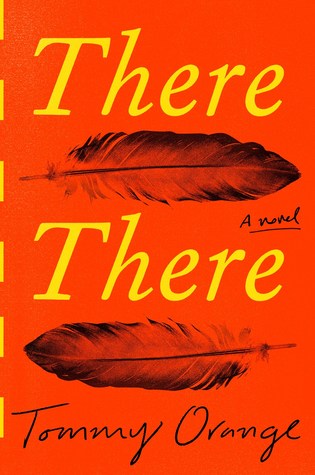 There There by Tommy Orange
Rating: ★★★ / PG-13-R
Recommendation: Yes
Review: There There is not a book you read if
you want to feel good about American history or society. This was another one
of those books that I was grateful to read because I will never know what it’s
like to be a Native American growing up in a 21st Century urban
area. I’m glad that I read this book because it opened my eyes and broadened my
horizons, but it made me recognize that I'm an overly privileged, white,
middle-class American who benefits immensely from the genocidal practices that
wiped out and marginalized native communities. It contains drug use,
abuse, and some graphic moments, but it seems to be, while fiction, a realistic
portrayal of life in Native urban communities, and one that I think everyone
can benefit from understanding a little more about. While very depressing, it
also contains a beautiful message of hope, community, and forgiveness.
Summary: There
There is a relentlessly paced multigenerational story about violence
and recovery, memory and identity, and the beauty and despair woven into the
history of a nation and its people. It tells the story of twelve characters,
each of whom have private reasons for traveling to the Big Oakland
Powwow.
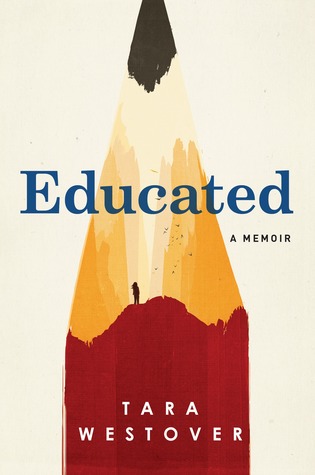 Educated by Tara Westover
Rating: ★★★★ / PG-13
Recommendation: Yes
Review: I started this
book with some trepidation because I knew that it was about a girl who was
raised Mormon and has since left the Church, but there is no church bashing of any kind in this book. Educated
is a memoir from a young woman my age. It tells the story of her
upbringing being “home schooled” in the mountains of rural Idaho, but beyond
the craziness and abuse that she describes, this is mainly a story of
overcoming immense challenges to obtain that most valuable of possessions: an
education. One of the main things I took away from this book was an increased
awareness of the effect that my own perspective and world views will have on my children, and how that can very acutely effect how they see themselves and
the world around them. This was a very brave book for Westover to write, and
she manages to communicate her story without coming across as vindictive or
bitter towards those who have wronged her.
Summary: Educated is
an account of the struggle for self-invention. It is a tale of fierce family
loyalty and of the grief that comes with severing the closest of ties. With the
acute insight that distinguishes all great writers, Westover has crafted a
universal coming-of-age story that gets to the heart of what an education is
and what it offers: the perspective to see one's life through new eyes and the
will to change it.
 The Order of Time by Carlo Rovelli
Rating: ★★★★ / G
Recommendation: Yes, especially for those who love science
Review: I’ve read
several books by Carlo Rovelli, and to be honest I never understand all of what
he says, but I always learn something new and feel enlightened. In this book,
Rovelli eloquently explains what physics has revealed about the nature of time,
and it’s pretty trippy. You can tell that Rovelli loves what he does because
his passion practically leaps off the page as he describes scientific theories and calculations in his lyrical prose. I recommend this book to anyone
wanting to learn more about the universe and how it works. It reminded me of a
scripture, “Time is measured only unto man.”
Summary: Why do we
remember the past and not the future? What does it mean for time to “flow”? Do
we exist in time or does time exist in us? In lyric, accessible prose, Carlo
Rovelli invites us to consider questions about the nature of time that continue
to puzzle physicists and philosophers alike.

No comments:
Post a Comment